Report
Analysis of Gram Vaani's Platform for Rural Development
Click on the above image to access project report
Report
Click on the above image to access project report
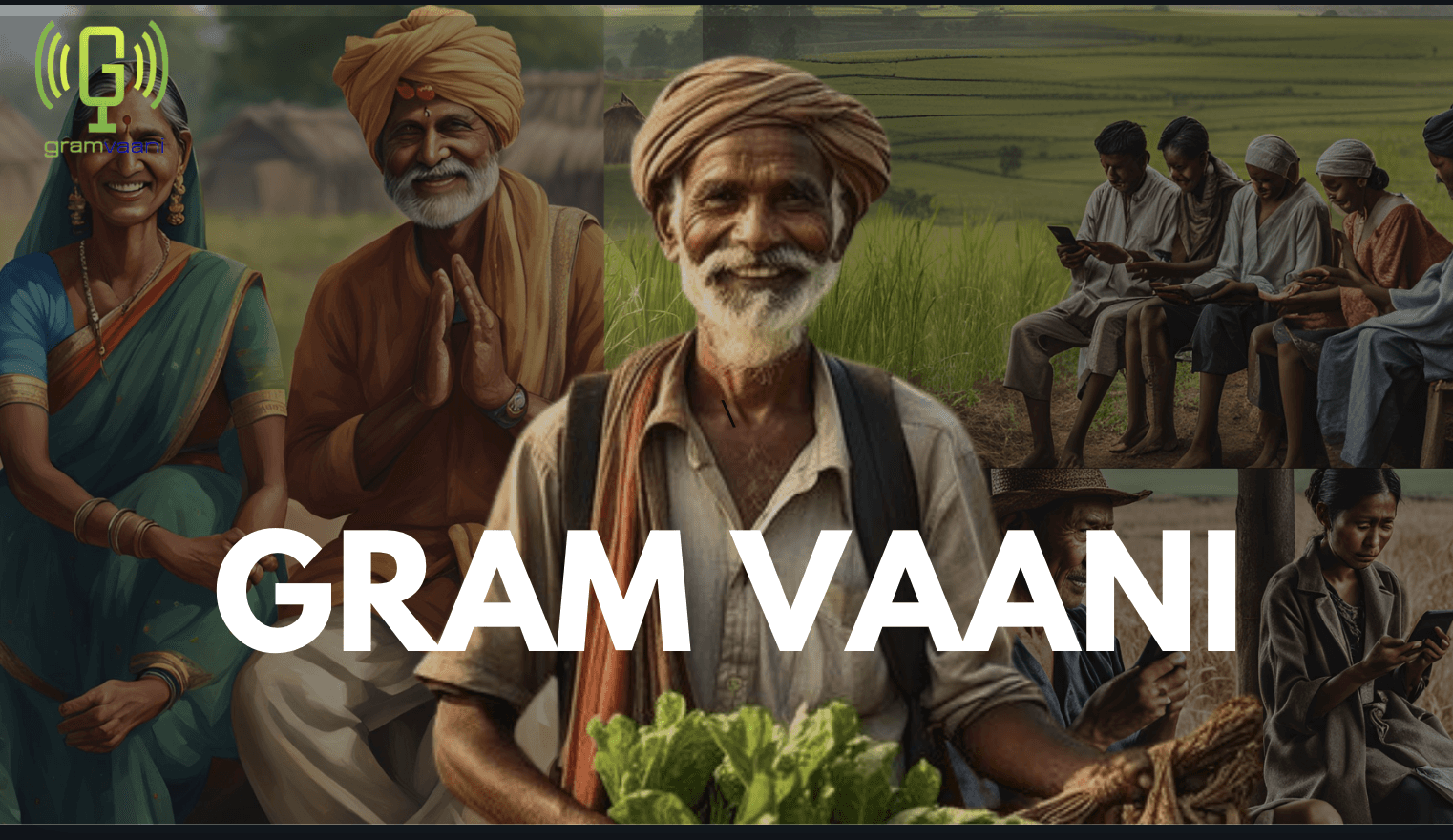
The Nexogenous Development Model analyzes external factors like technology, policies, and socio-economic forces affecting rural development. Using this framework, we studied Gram Vaani, an NGO leveraging digital technology to enhance communication and local engagement in rural markets.
By tagging and categorizing archival data, we systematically assessed their strategies' impact on community engagement and sustainable development. Combining data analysis with interviews provided a holistic understanding of how ICT supports development at the community level.
Our findings emphasize the transformative potential of technology in bridging information gaps and fostering meaningful social change in underserved populations.
1. Platform Selection — Gram Vaani, an innovative digital platform for rural social mobilization, was chosen for its alignment with the Nexogenous Development Framework, focusing on community participation, social innovation, and rural development.
2. Framework Definition — The Nexogenous Framework systematically evaluates rural development across dimensions like social innovation, community engagement, and proximity.
3. Data Collection — A total of 58 archival resources, including news articles, blogs, social media posts, academic papers, and Gram Vaani's website, were analyzed, along with scheduled calls for deeper insight.
4. Tagging System — Resources were tagged line-by-line using CATMA (Computer Assisted Text Markup and Analysis), producing 1,194 tagged phrases, exported into Google Sheets for further analysis.
5. Inter-Rater Reliability (IRR) — Tested on 15 sample phrases using JASP software, resulting in a strong IRR score of 0.785, validating the tagging process.
6. Corpora Creation — Tagged phrases were grouped into corpora based on dimensions like democratic participation and community engagement.
7. Quantitative and Qualitative Analysis — Tag frequencies revealed the most-discussed dimensions, while content analysis examined the quality of interactions and engagement.
8. Validation — An interview with Gram Vaani's Community Media Manager was cross-referenced against the analysis to refine conclusions.
The primary drawback is that the platform only supports the languages for which it was initially created. Gram Vaani currently operates primarily in Hindi and English. Even when a location is set to Tamil Nadu, dialogue in the Mobile Vaani app is in Hindi, limiting the platform's capacity to solve challenges specific to particular communities.
Gram Vaani relies on partnerships to handle user-reported problems, addressing common and widespread issues alongside particular complaints. Reliance on collective triaging reduces an individual's control over whether their specific concern gets handled, which can leave some users feeling isolated.
Content is examined by a small staff of 15–16 moderators, which impedes rapid processing and publication of information — evidenced by delayed replies to user issues and, conversely, gaps on the platform.
This report confirms how digital platforms contribute to improving rural communities' opportunities for communication, engagement, and access to resources. Key dimensions — Participation, Innovation, and Local Partnerships — proved critical in the functioning of Gram Vaani, enabling communities to raise concerns and take part in decision-making, while local partnerships enhance the sustainability of its programs and help fill knowledge gaps in health, governance, and agriculture.
Having analyzed both qualitative and quantitative data, it was evident that Gram Vaani not only raises the voice of the community but also inspires personal and community development, making it a strategic contender in mobilizing technology for social change in untapped rural segments.